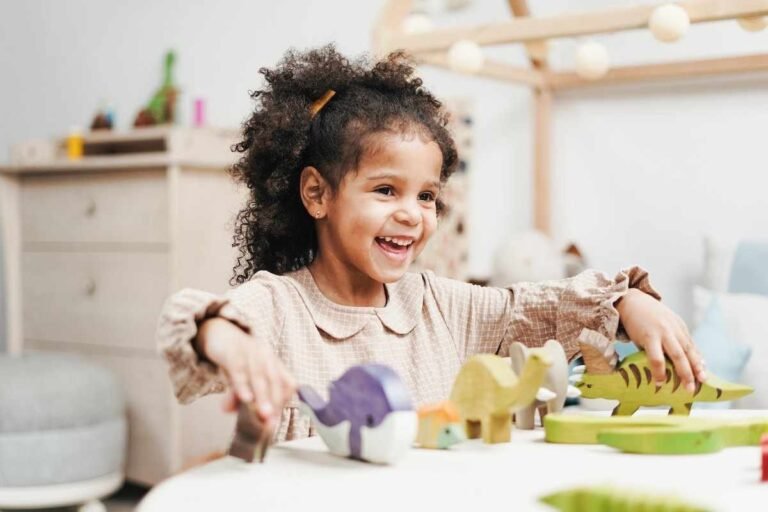
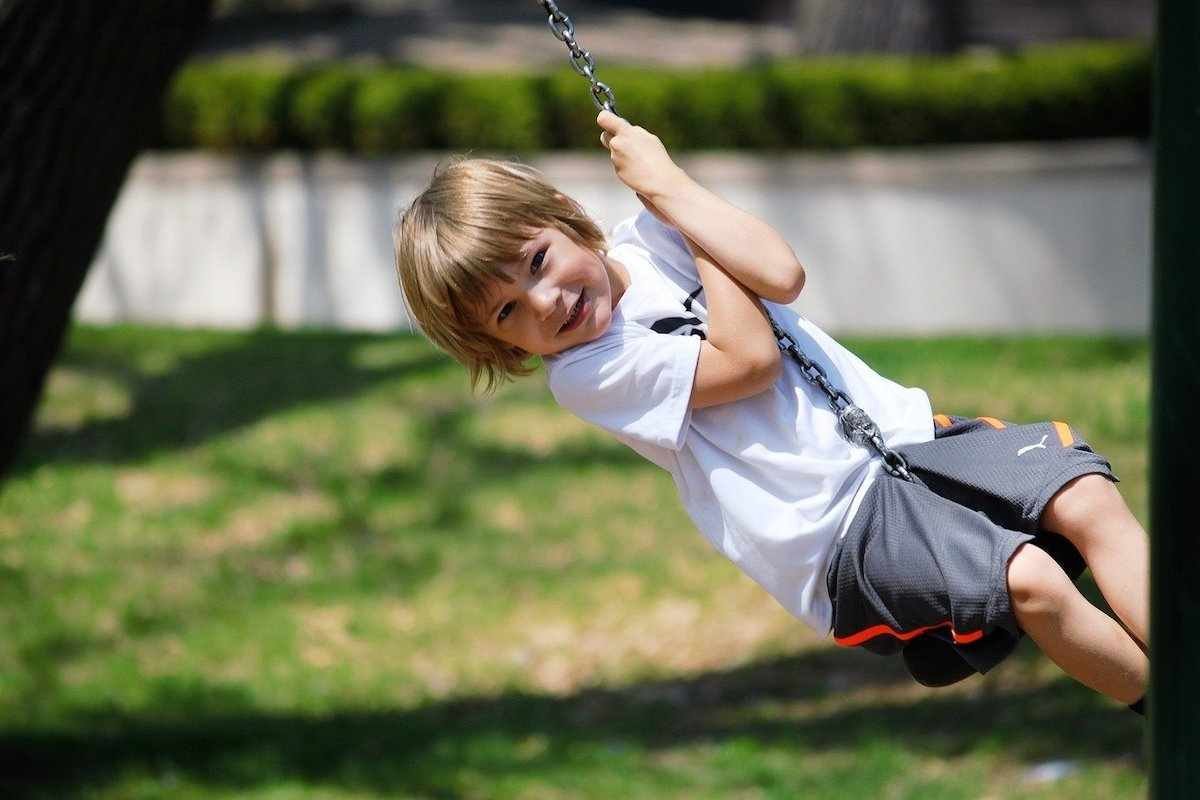
When your child is bored, don’t feel guilty when you tell your kids to go outside and play! Here are four key benefits of outdoor play and why it matters so much for children to grow and thrive.
Sign up for our free newsletter stuffed full of ideas, competitions and offers. PS Did we mention it’s free?
“Go outside and play!”
Do you remember your parents saying that?
And that’s exactly what we did — we went outside and we played. For hours on end, my sister and I would play “Sixes” with a tennis ball, or rounders with the children in our neighbourhood. We were imaginary pirates, or cowboys, or racing drivers. We raced round the garden, played in the mud, swung from the trees, clambered over the old car in the back yard. Our parents had probably never studied child development, but they knew exactly what children needed to thrive when they said, “Go outside and play.”
When kids complain they’re bored, it’s easy to feel pressured into letting them watch TV or scroll on a tablet, or to feel guilty that you should be entertaining them yourself. But if your children are moping around the house, “Go outside and play” is probably the best thing you could say.
Here are four important reasons why outdoor play is one of the healthiest developmental activities your child can enjoy.
You May Also Enjoy 20 Great Outdoor Childhood Games to Play
4 Reasons to Tell Your Children to “Go Outside and Play”
P – Physical Development
L – Language
A – Adventure
Y – your child is You-nique!
Let’s take a look at each of these.
#1. Physical Development

It’s obvious that physical activity helps build strong, healthy bodies. But play is so much more.
Watch your child playing outside. Notice all the different physical movements involved — pouring, pausing, stretching, leaning, picking up, putting down. Your child is developing a huge range of skills, including fine-motor coordination, the ability to cross the midline, balance, and eye-hand coordination. These skills all impact how well children cope with formal learning, so play is never a “waste of time”.
Young children learn best from experience, using their senses actively rather than sitting passively in front of a screen. “Go outside and play” means whole-body, hands-on learning.
You May Also Enjoy 50 Fun Outdoor Activities For Kids
#2. Language Development
Language happens naturally when children play. As they chat, they build vocabulary, articulation, language skills and their understanding of concepts. Imagine the conversation as children work together to build a fort:
“We need a long stick to hold up the roof.”
“That one’s too crooked.”
“This one’s better. Now we need some rope to tie it.”
Even a few sentences like this give a glimpse of the language that develops as children communicate with each other in play. Whether a child is speaking aloud or working things out quietly, language develops through play because new, self-created situations demand problem-solving and require children to articulate their needs and experiences.
You May Also Enjoy Why Imaginative Play for Children is So Important
#3. Adventure

Adventure happens when children play outside. They explore the environment — different textures and tactile experiences: rough wood, warm round stones, sand trickling between fingers, water splashing and sloshing and wetting your clothes, the squish of mud between your toes, swaying in treetops.
Children explore and absorb:
- All sorts of sounds — hammering, puffing, shouting, whooping, clacking, buzzing bees, birdcall, wind swishing, leaves rustling.
- Smells — the scent of leaves and wood, the smell of damp grass, of fresh bread in a picnic lunch.
- New worlds through imagination. Play is the place where, no matter who you are, you can be a firefighter or a princess, a space explorer, a dragon-slayer or a peacemaker, or whatever else you choose. Imaginative play is where children dream up all they can be and practise considering alternatives and making choices.
Through play and imagination, children develop the creativity and problem-solving skills needed to deal with life’s challenges. No one understood this better than Einstein, one of the greatest minds humankind has known.
“Imagination is more important than knowledge. For knowledge is limited, whereas imagination embraces the entire world, stimulating progress, giving birth to evolution.” – Albert Einstein
You May Also Enjoy Why Letting Your Child Take a Risk May Actually Be Good for Them
#4. You-nique!
To each child we can say, “You are a unique YOU!”
Through play, children explore their sense of self — “Who am I?” “Who am I not?” They try out different roles, interacting with each other in the world of pretend.
You — a unique person — how you play, where you play, what you play, who you choose to be — it all naturally unfolds.
Children learn to focus; they develop patience, persistence and resilience. They learn to assess potential dangers and build self-reliance. Through play, they discover their own You-niqueness.
To children, play is simply the natural way of being.
True play naturally develops the child’s:
Physical self,
Language and communication,
Adventure and imagination,
and, most importantly, that
You-niqueness that makes each child the special “one and only” that you love.
Play is the work of childhood, and probably the activity most parents under-rate. Without play, children wouldn’t grow to their full potential. So now you have four good reasons not to feel guilty when you tell your kids to go outside and PLAY. All you need to do is provide the space and the props — and let creativity take over.
You May Also Enjoy Get Active With These Fun Obstacle Course Ideas for Kids

The author’s parenting book, “Stop Yelling – 9 Steps to Calmer Happier Parenting,” is available on Amazon, with strong reader reviews. If you want practical ways to respond to sibling conflict or other family hiccups, it’s worth a read.

Frequently Asked Questions
Why do children need outdoor play instead of screen time?
Outdoor play gives children a whole-body, sensory experience that screens can’t replicate. It builds physical skills like balance and coordination, encourages problem-solving and communication, and gives children room to use their imagination in ways passive screen time doesn’t.
My child says they’re bored outside — what should I do?
Resist the urge to step in and entertain them straight away. Boredom is often the trigger for imaginative play. Give it a little time, provide some loose props (sticks, a ball, chalk, an old sheet) and let their imagination take over.
Is unstructured outdoor play really as valuable as organised activities?
Yes. Free, unstructured play lets children direct their own learning — making decisions, negotiating with playmates, and solving problems on their own terms. Both structured and unstructured play have a place, but free play is where much of a child’s creativity and resilience develops.
How much outdoor play should my child get each day?
This can vary by age and circumstance, so it’s worth checking current guidance from a trusted health source for your child’s age group rather than relying on a fixed number here. As a general principle, aim for outdoor play most days, weather and safety permitting.
Related Articles
- 20 Great Outdoor Childhood Games to Play
- 50 Fun Outdoor Activities For Kids
- Why Imaginative Play for Children is So Important
- Why Letting Your Child Take a Risk May Actually Be Good for Them
- Get Active With These Fun Obstacle Course Ideas for Kids
Enjoyed this? Browse our full collection of outdoor play ideas and family activities, or save this article to come back to next time you need a little inspiration.
Want More Ideas Like This?
Sign up for our free weekly newsletter for outdoor play ideas, activity inspiration, competitions and offers, straight to your inbox.