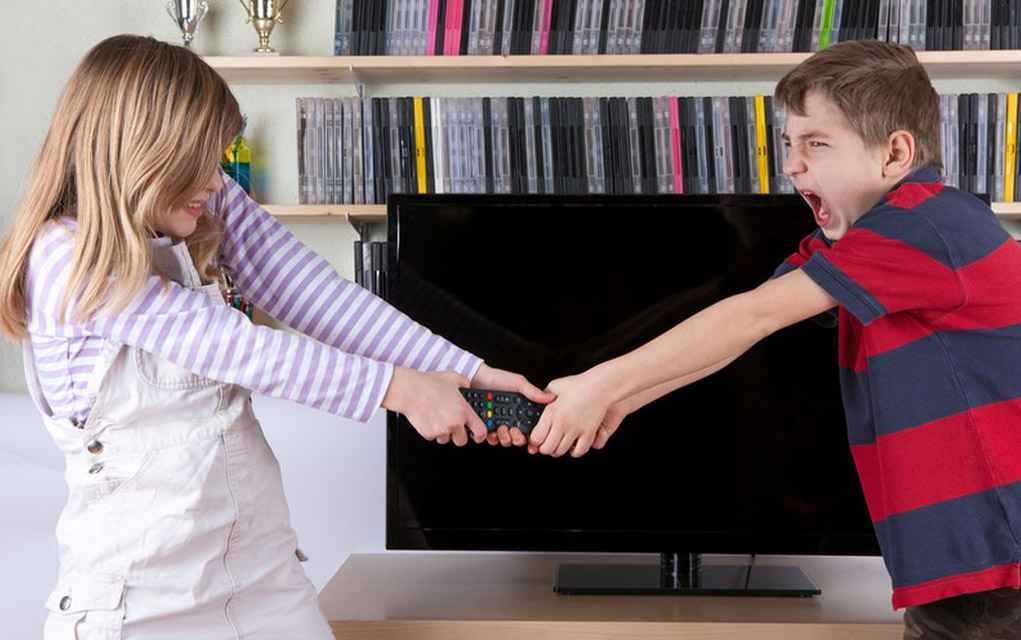
“That’s mine!”
“Don’t look at me!”
“You’re always picking on me!”
Like a tiny stone in your shoe, sibling bickering irks and it’s hard to put your attention anywhere else. It makes sense that squabbling children can wreck a parent’s head.
“Why can’t they just play nicely!”
When they were tiny, you imagined they’d be best friends – but sometimes they seem like worst enemies. If you’re a parent trying to figure out how to stop the kids fighting, especially during long school holidays when everyone is under the same roof, you’re not alone.
“How to stop the kids fighting?”

It’s a question many parents would love to have answered. But what if we’re asking the wrong question?
The thing is, the question we ask determines the direction we take and where we end up. When we focus purely on stopping the fighting, the conflict doesn’t disappear – it just goes underground and resurfaces somewhere else, at some other time.
What if a more helpful question is: “How do I help my children fight well?”
In other words, kids will experience frustration with each other sometimes. But we can guide them to handle conflict in a way that helps them learn to speak up for what they need without becoming aggressive.
> Teaching our children how to have a “good fight” is probably one of the most important skills we can give them, because we all have to learn to navigate relationships – at home, at work, in recreation and in the world out there.
We all know what unhelpful fighting looks like. Raised voices. Name-calling. Slamming doors. Dramatic exits with no resolution. Perhaps even violence.
Most parents strive not to fight in front of the kids – we know this isn’t what we want for them. But we often haven’t thought about how to help our children learn the art of fighting well.
So what does a “good fight” look like?
> A good fight is where we use our anger to express what we need, without resorting to blaming, shaming, belittling or hurting anyone else.
So how do you help your children have a “good fight”?

First, think about your own role.
In almost every situation where children are fighting, parents set themselves up to be the referee: “Who started it?” “What did you do?” We try to rescue the situation. We console the “victim” and coerce the other: “Be kind to your little brother.” We don’t realise it at the time, but we’ve just stepped into the triangle trap.
When we identify one child as “the victim,” we also create a “perpetrator” – without meaning to, we cast one of our children in the role of the “baddie.” And once we go looking for someone to blame, it usually ends in a downward spiral.
Have you ever tried to sort out a squabble, only for it to end in tears and accusations? You find yourself caught in the middle of the wrangle – and ten minutes later they’re friends again, muttering together about you, glancing arrows in your direction. And all you’d tried to do was help.
You’d inadvertently stepped into the triangle trap.
Psychology has a term for these three-way interactions that snare us: triangulation. The strange thing about these triangles is that they have a life of their own – they rotate positions. The “rescuer” (you!) suddenly finds the triangle has shifted, and now you’ve been cast as the perpetrator – the kids see you as the “baddie.” Your well-intentioned intervention is seen as interference. One sibling “rescues” the other – they’re buddies again, and both are glaring at you.
So what do you do differently? How do you stop triangulation happening?
Don’t enter the triangle by taking on the role of “rescuer” – unless there’s a genuine threat of serious harm.
You’re probably thinking, “But I can’t let them hurt each other! What am I supposed to do instead?”
Here’s the secret many parents don’t know:
> Rather than trying to “rescue” the situation, see your role as facilitator – one who makes it easier for the children to learn to use negotiation to get what they need.
Ideally, you want to help them find a way forward before the argument becomes so heated they can’t think straight. So when you hear the tone of your children’s voices change – when you sense things are becoming tense – come a little closer, without stepping directly into their space, and ask:
“Sounds like you’re getting upset. Do you need help sorting this out?”
Sometimes this question alone is enough to get them back on track to negotiate what they need. At other times, they’ll ask for your help, or they’ll try to figure it out themselves and end up fighting anyway.
Now you step in – not as rescuer, but as facilitator.
Acting as a Facilitator, Not a Rescuer

First, if tempers have become volatile, everyone needs time to calm down.
Once you’ve given them space to calm, so their “thinking brain” is back online, it’s time to facilitate. The skill is in the questions you use.
If you interrogate with “Who did what?” you’ll end up back in the triangulation trap. In the same way, “Why?” questions in a conflict situation will only lead to your children blaming one another or making excuses.
What’s more helpful is to use “What?” questions:
- “What are you needing?”
- “What do you want to see happen?”
- “What do you think your brother/sister needs?”
- “What can you do so that you can both be happy?”
- “What can you do to help make this happen?”
Listen to each child’s response before moving on to your next “What…?” question. Reflect back what you hear them say.
It’s tempting to rush in with your own solutions, but the key to developing lasting patterns of “fighting well” is to help your children find their own answers. When they decide what will work for them, they’re far more likely to be invested in making it happen – and it also builds their competence, which builds their self-esteem.
When you use “What?” questions, you move from rescuer to facilitator – and open the door to genuinely helpful ways forward.

It’s a big challenge to help our children learn to fight well, but with these techniques, you can start moving in the right direction. Knowing how to fight well is key to happy relationships – imagine the unhappiness your child could avoid in life if they know how to do it.

Frequently Asked Questions
Why shouldn’t I just stop the kids fighting altogether?
Stopping a fight in the moment doesn’t teach children how to handle conflict. The underlying frustration usually resurfaces later in another form. Helping them learn to “fight well” gives them a skill they’ll use for life, not just a moment of quiet.
What is the “triangle trap” parents fall into?
It’s when a parent steps in as referee or rescuer, unintentionally casting one child as “victim” and the other as “perpetrator.” Because these roles shift constantly between siblings, the parent often ends up being seen as the problem by both children.
When should I actually step in and stop a fight?
If there’s a genuine risk of serious harm, step in immediately. Outside of that, try shifting from rescuer to facilitator – asking open questions rather than assigning blame.
What kind of questions help children resolve conflict themselves?
“What” questions work best: “What are you needing?” or “What do you think would help?” Avoid “Who started it?” or “Why did you do that?”, as these tend to trigger blame and excuses rather than problem-solving.
Does this approach work for very young children too?
Younger children will need more support putting their feelings into words, but the same principle applies: calm first, then guide them gently toward naming what they need rather than solving it for them.
Related Articles
- Building Your Child’s Self-Esteem: Practical Tips for Parents
- Managing Big Emotions: Helping Kids Handle Anger and Frustration
- Sibling Rivalry: Why It Happens and How Parents Can Help
Enjoyed This? Explore More Family Life Ideas
If this approach was helpful, browse our family life section for more practical parenting guidance and ideas to try at home.
Don’t Miss Our Best Content
Sign up for our free newsletter and get fun ideas, family-friendly recipes, expert advice, parenting tips and great competitions straight to your inbox every week.